.svg)

%201.svg)
Common Violations and How to Avoid Them
Running a commercial or community pool in New Jersey comes with more responsibility than simply keeping the water blue. Every public or semi-public pool — including those at HOAs, apartment complexes, hotels, and clubs — must comply with the New Jersey State Sanitary Code, Chapter IX: Public Recreational Bathing (N.J.A.C. 8:26).
This set of regulations, enforced by local and state health authorities, defines how pools must be built, operated, staffed, maintained, and monitored to protect public safety. Failure to meet these standards can result in immediate closures, fines, and liability risks for owners and property managers.
Below are the most common pool code violations in New Jersey — and how your facility can stay compliant year-round.
1. Missing or Outdated Operating Approval
Before opening each season, every public pool must obtain written approval from the local health authority confirming compliance with N.J.A.C. 8:26-2.6. Seasonal pools must be re-inspected annually, while year-round facilities require ongoing operational assessments. Depending on the County, this inspection may occur before the pool opens to the public in spring, or may be done at a random time during the season. Contact your local health official for you're county's procedures.
How to stay compliant:
- Submit the state’s Public Recreational Bathing Facility Checklist at least 21 days before opening.
- Display the official operating approval in a visible location on-site.
- Renew annually and update documentation for any new equipment or renovations.
2. Improper Staffing or Missing Lifeguards
Under § 8:26-5.2, every pool must be under the supervision of a designated adult supervisor and a Trained Pool Operator (TPO).
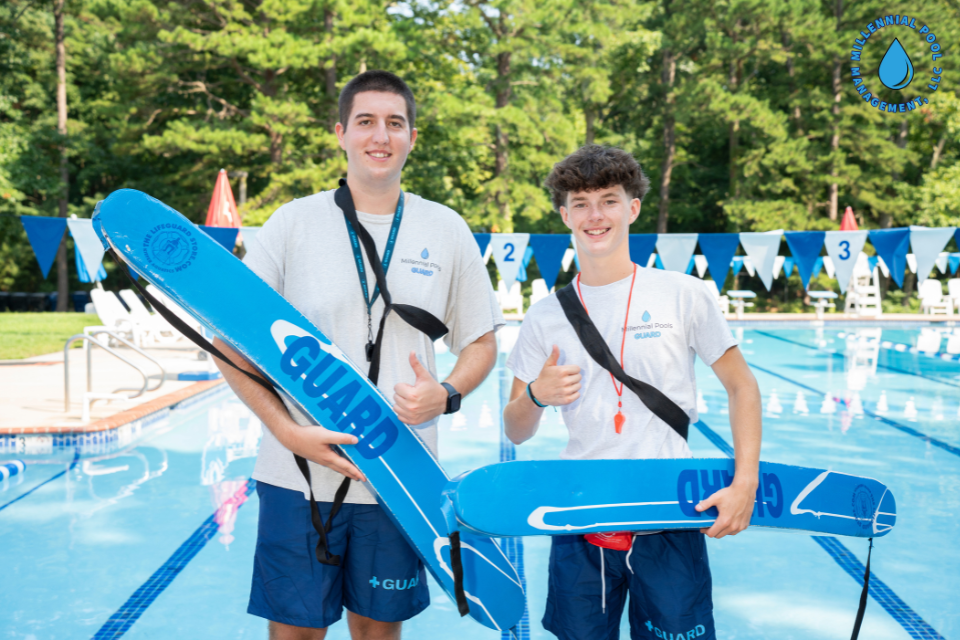
- Pools under 2,000 sq ft require at least one certified lifeguard on duty.
- Larger pools (over 2,000 sq ft) must have a minimum of two lifeguards, plus additional coverage depending on bather load and visibility zones
Common violations:
- Guards distracted by phones or secondary duties.
- No CPR/first aid–certified personnel present.
- Lack of a written Aquatics Facility Plan and Zone of Protection Plan for lifeguards.
Exemptions:
How to avoid it:
Partner with a management company like Millennial Pool Management, which provides certified lifeguards, trained supervisors, and real-time scheduling oversight to ensure full compliance and safety coverage at all times.
3. Inadequate Water Quality and Chemical Balance
The code sets strict limits for disinfectant levels, pH, clarity, and microbiological quality under Subchapter 7: Sampling and Water Quality Criteria.
Violations such as low chlorine residuals, cloudy water, or missing test records can trigger an immediate pool closure.
Stay compliant by:
- Testing water at least every two hours during the pool operational times. If you have an automatic chemical feeder, such as a Hayward CAT 4000, this number reduces to once in the morning and once in the evening (twice per day).
- Maintaining a chlorine residual of 1.0–3.0 ppm and pH between 7.2 – 7.8.
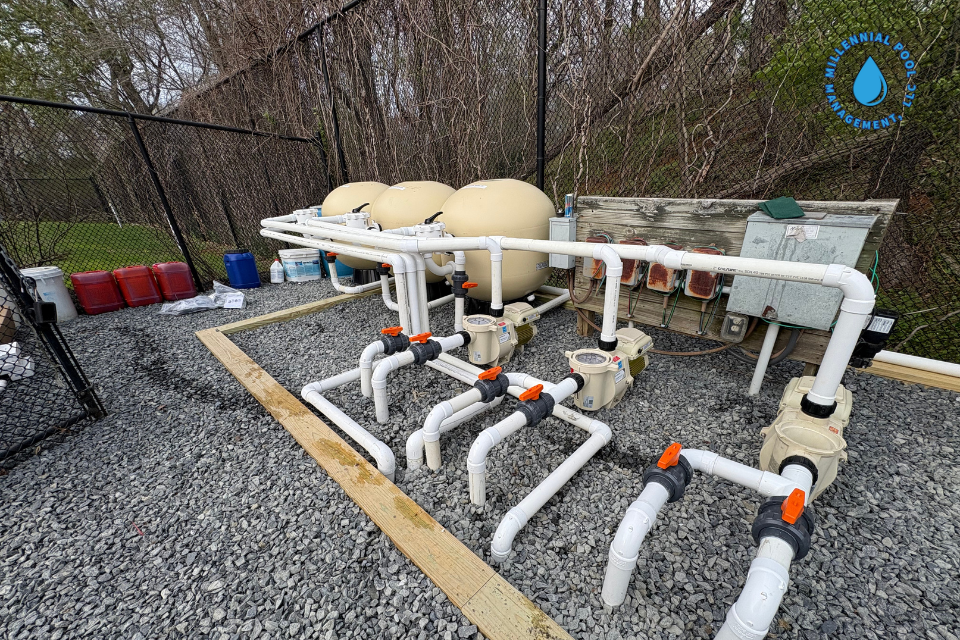
- Using only approved chemical feeder systems installed downstream of filters and heaters (gas chlorination is prohibited).
- Keeping at least one month of water-testing logs on file for inspection
4. Safety Equipment and Signage Issues
Every pool must have emergency and warning equipment easily accessible under § 8:26-5.3 and 5.4. Common citations include missing life hooks, outdated first-aid kits, or faded signage.
Required items include:
- Life hooks or assist poles (no telescoping plastic models).
- Rescue tubes and a fully stocked NJ DOH–approved first-aid kit.
- A spine board with straps, and AED for guarded facilities.
- Approved bather rules sign with the exact language in NJ 8:26 code.
- Hours of Operation & Emergency Contact Sign
- First Aid and Emergency Equipment Location Sign
- Depth Markers and “NO DIVING” Warnings
- Special Signs for Wading Pools, Spas, and Spray Parks
- Posted rules for bathers — including communicable-disease restrictions, shower requirements, and diaper rules — exactly as listed in § 8:26-5.4(a)
Pro tip: Signs must be legible, weather-resistant, and visible from all entrances. Missing or inaccurate wording is one of the easiest violations for inspectors to cite.
5. Fencing, Electrical, and Construction Non-Compliance
Structural violations are often overlooked until major renovations arise. The code requires that:
- All pools and wading pools be enclosed by a minimum 4-foot-high barrier with self-closing, self-latching gates (§ 8:26-3.12).
- Electrical systems, grounding, and bonding meet the New Jersey Uniform Construction Code (N.J.A.C. 5:23).
- Annual Bonding certifications be renewed annually for seasonal pools.
- CB-20 Forms (Main Drain Covers) in compliance with manufacture lifespan (typically 5 - 7 years)
- 5-Year Bonding & Grounding, completed by a certified electrician
Failing to maintain updated electrical or structural certifications can cause insurance and liability complications — especially in the event of an accident.
The New Jersey Public Recreational Bathing Code isn’t just red tape — it’s the foundation of safe, compliant, and professional pool operation. A proactive approach to inspections, documentation, and staff training helps your facility avoid violations while protecting residents and guests.
If your property needs help staying compliant or preparing for a local health inspection, Millennial Pool Management can assist with compliance audits, certified staffing, and year-round maintenance programs tailored for HOAs and commercial facilities across New Jersey. Click here to learn more!